I've Changed My Mind — Senior Leaders Should Be Coding Again
For years I told senior technical leaders not to code. AI agentic tooling has erased the tradeoff that drove that advice. Here is what changed, and what it looks like to spend an hour a week back in the codebase.
I’ve changed my mind. Senior leaders of technical organizations should be coding.
Whether you’re a senior software engineering manager, director, VP, or CTO — get into the weeds with your teams’ codebases, system architectures, and development workflows. Push code to production.
If you’re hiring and interviewing senior technical leaders, consider adding a live coding session that starts with a functional codebase and an AI-enabled IDE and see what they can do.
I used to have the exact opposite opinion
Literally 180 degrees.
I used to think leaders of big orgs should not code. That it was a red flag for anyone besides front-line managers of small teams.
If I saw this red flag, I’d think they didn’t know how to effectively serve their teams with leadership, management, influence, and strategic-thinking chops — and just stayed in their technical comfort zone, having relatively little impact.
You can probably guess what changed my mind.
👉 AI 👈
For senior leaders, the time it took to stay connected to the code and development workflows was not worth the tradeoff. There were vastly more high-impact things to be done.
All that’s changed. There’s no longer a tradeoff.
What this looks like in practice
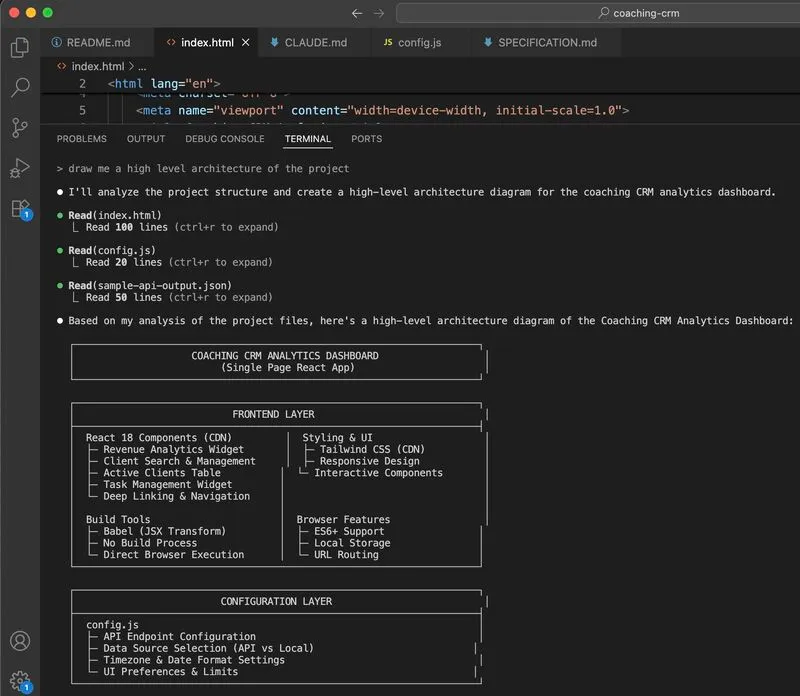
Pull up one of your teams’ codebases and use an agentic AI plugin like Claude Code. Prompt it to:
- Walk me through the codebase.
- Draw me a high-level architecture.
- Pretend I’m a junior engineer new to the team and show me what I need to know.
- Make this [small front-end change], including tests, and explain it to me like I’m a new team member.
You need to have an opinion on where AI can be incorporated into your workflows to achieve big productivity gains. Yes, still rely on your tech leads and other advisors — but now you can get hands-on and ask them better questions and brainstorm along with them.
You need to recalibrate your intuition on what is an appropriate level of effort for small and big changes.
You need to know how to invest in your team so that they’re leveraging AI and growing their skill sets. Experiment and have fun along with them.
You can spend an hour a week getting in the weeds with the code and still have time to be a high-impact senior leader.
There’s no longer a tradeoff.
Why do this?
- Your intuition on what it takes to build software — finely tuned over your career — needs to be recalibrated.
- You need to be hands-on to really see what’s changed.
- You’ll understand your teams’ friction points at a deeper level.
- It is damn fun.
- It won’t take a lot of time.
In my line of work I get a broad view of how companies of all stages are rolling out AI. Things are moving fast, and the tools and models are getting quite good. (Related: I’m hosting a free roundtable for Director+ engineering leaders on AI adoption.)
I’m optimistic. This is fun. Get coding.