Tell Others About Your Work — A Career-Accelerating Skill Most Engineers Skip
Self-promotion feels icky to most engineers, so we don't do it. But helping peers and leaders understand your impact is a career-accelerating skill.

Many of us are uncomfortable with showcasing our work. Maybe there’s fear of being perceived as self-serving or “sales-y.” But letting others know about the hard problems we’ve solved and the impact we’ve had — that would be SO welcome by the people that matter to us. Sharing our results, impact, and learnings — and recognizing others who contributed — is a career-accelerating skill.
I made a short deck on this. Swipe through, then keep reading for the structured version.



Why we don’t talk about our work
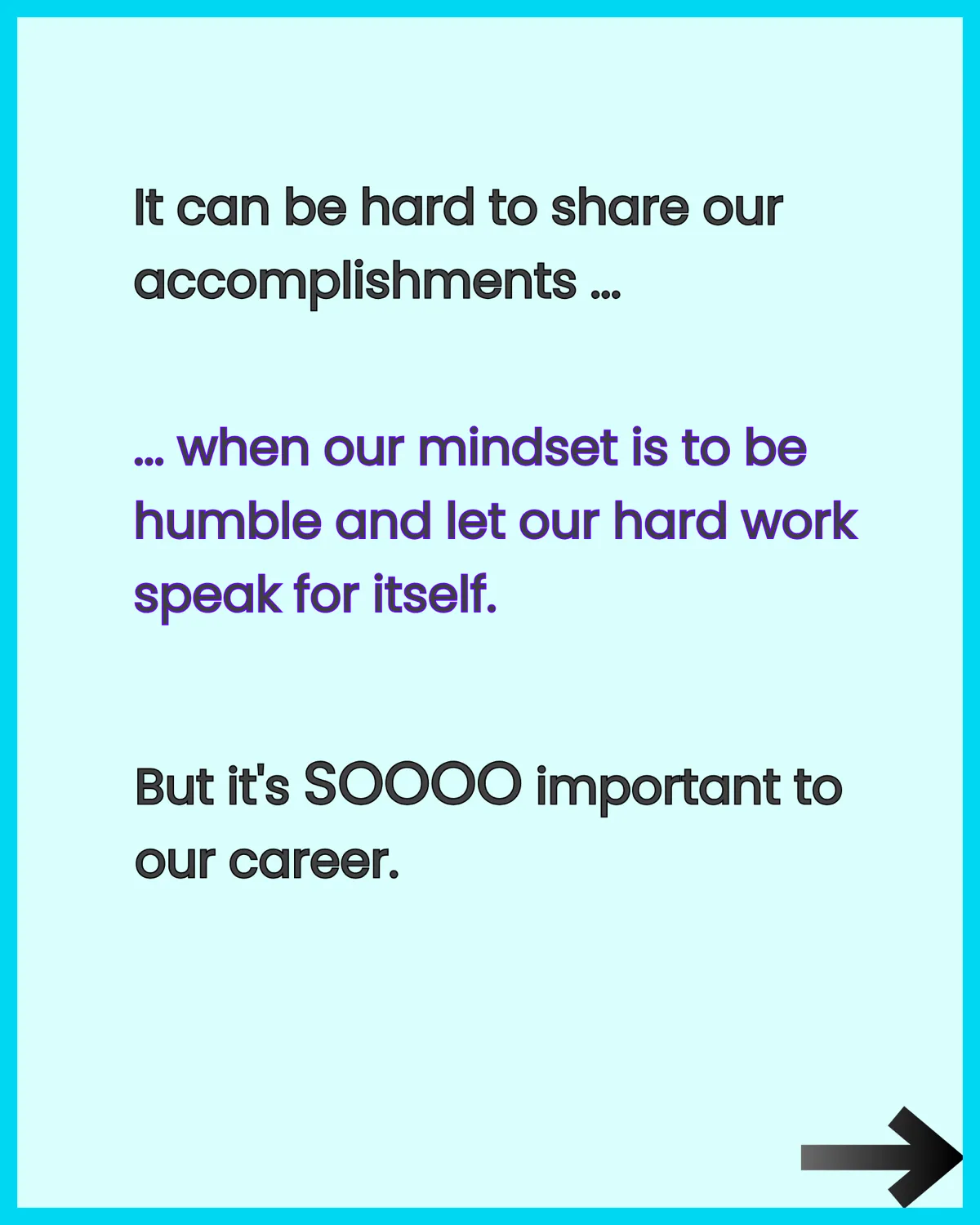
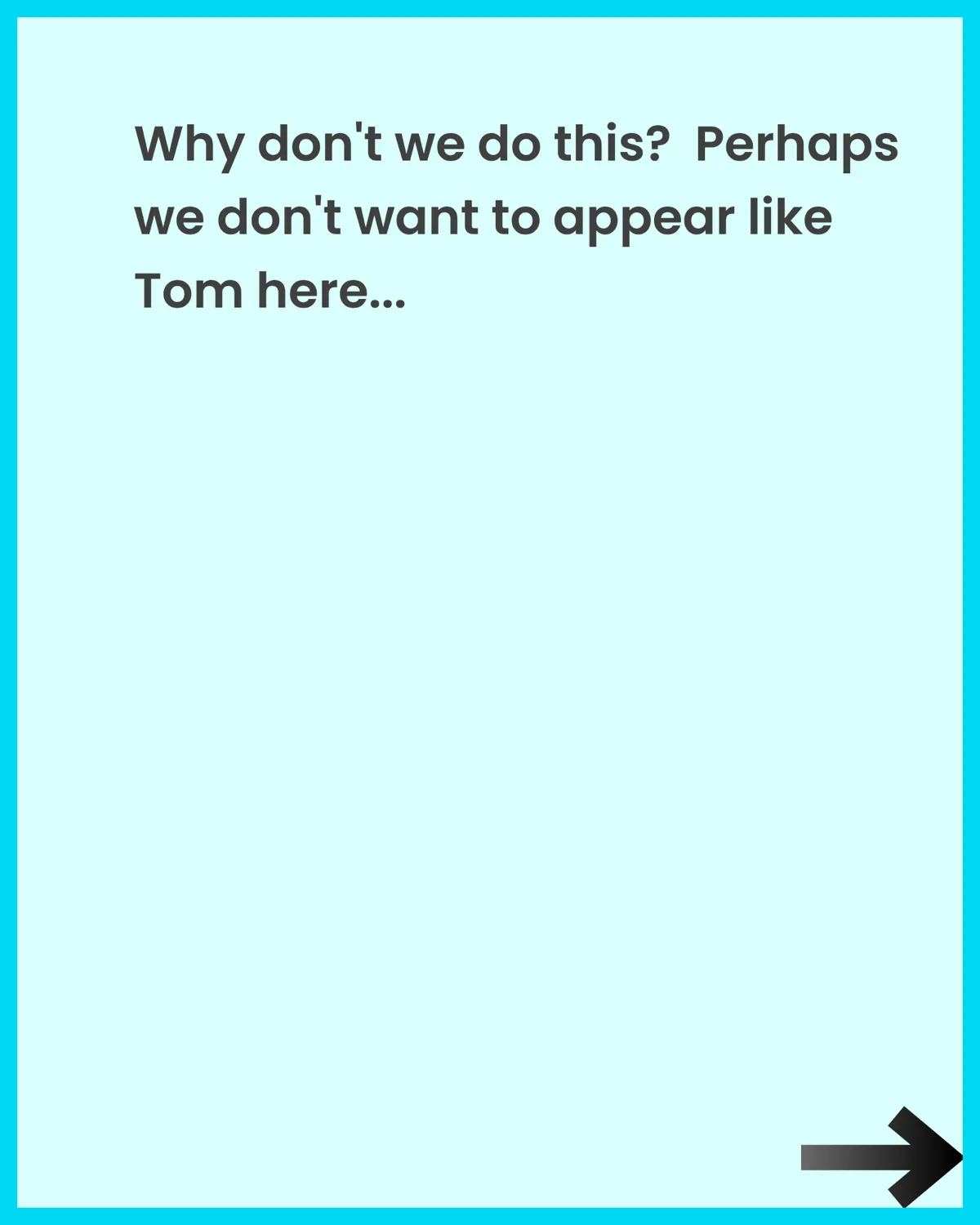
When our mindset is to be humble and let our hard work speak for itself, sharing our accomplishments can feel hard. We worry about being perceived as self-serving — the office “Tom” who can’t stop trumpeting his own wins.
That’s annoying when Tom does it. But most of us aren’t Tom.
Why we should anyway
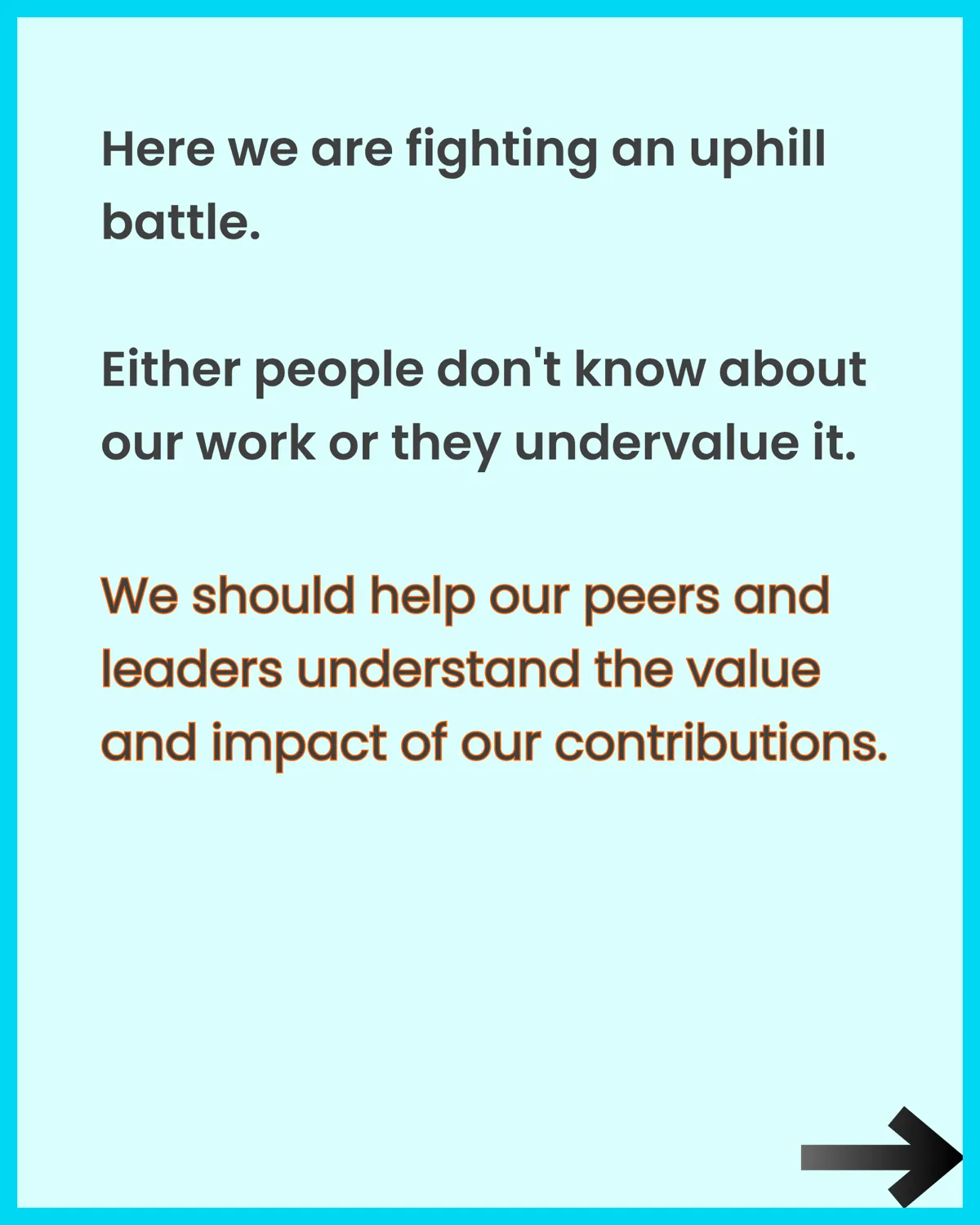
Much more likely, we’re in the opposite situation: people around us don’t know about our work, or they undervalue it. We’re fighting an uphill battle for recognition without realizing it.
We should help our peers and leaders understand the value and impact of our contributions — not to brag, but to make sure the right work is visible to the right people.
What people actually want to know
Stakeholders aren’t asking “what tickets did you close?” They want to know things like:
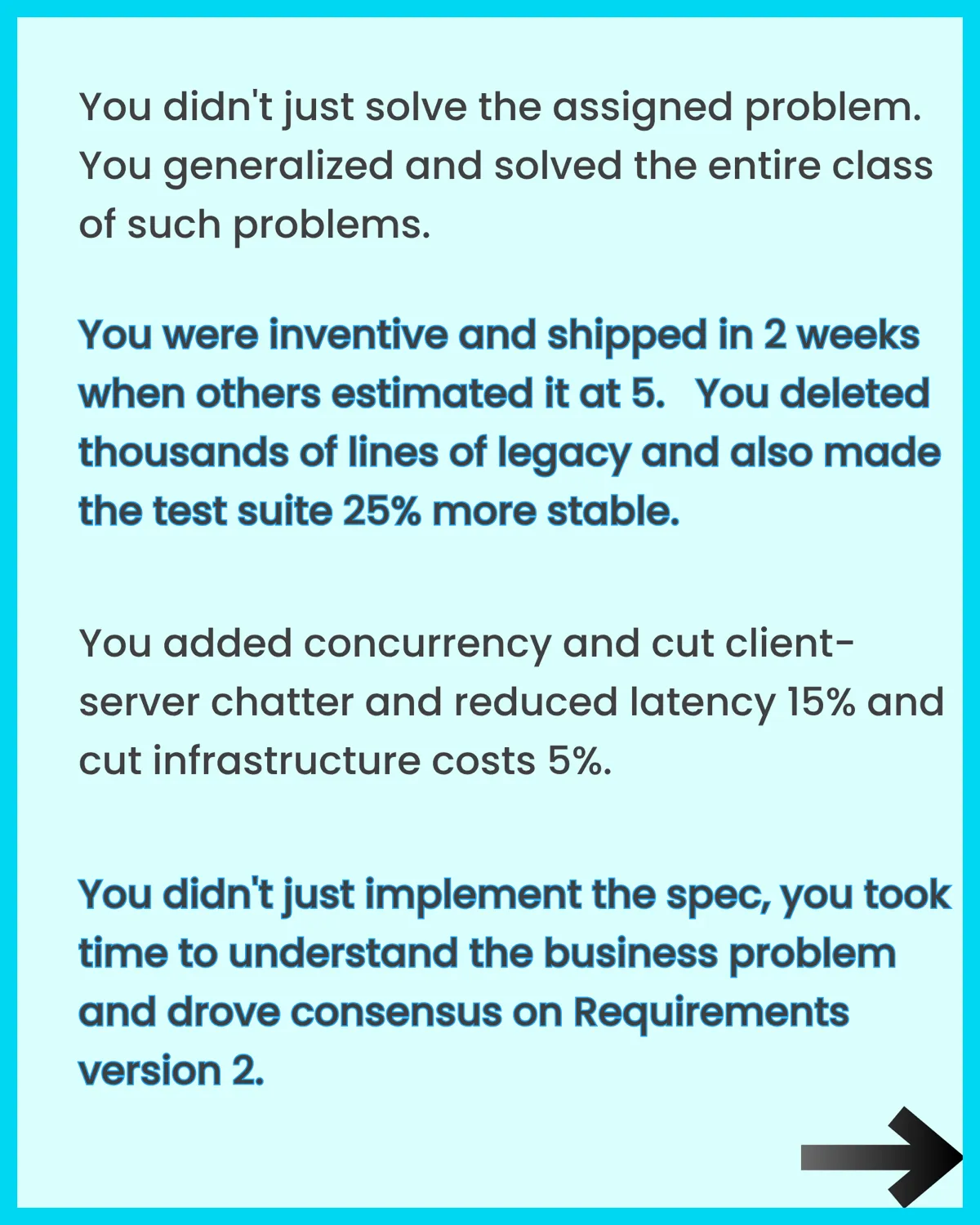
- You didn’t just solve the assigned problem — you generalized and solved the entire class of such problems.
- You were inventive and shipped in 2 weeks when others estimated 5.
- You deleted thousands of lines of legacy and made the test suite 25% more stable.
- You added concurrency and cut client-server chatter, reducing latency 15% and infrastructure costs 5%.
- You didn’t just implement the spec — you took time to understand the business problem and drove consensus on Requirements v2.
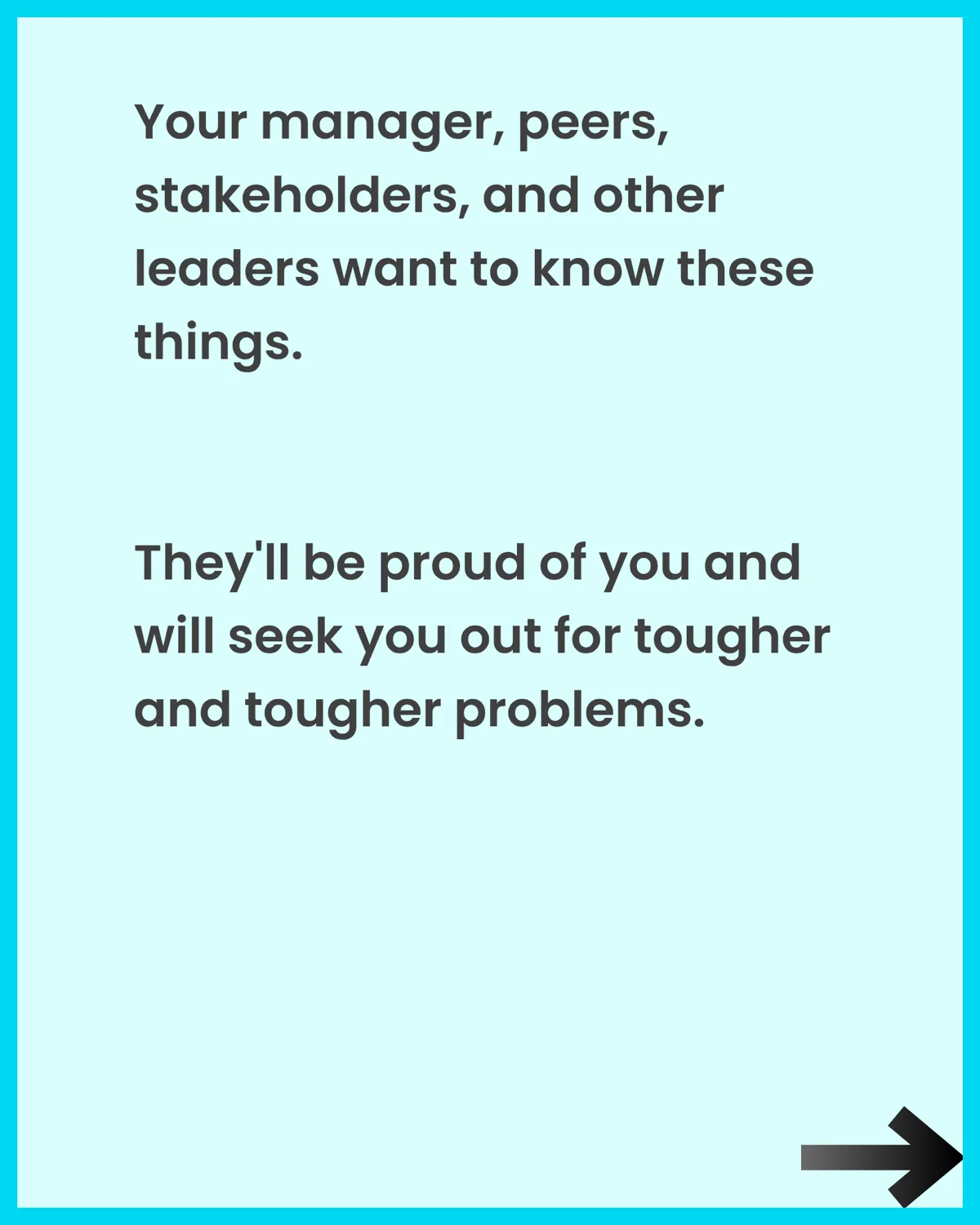
Your manager, peers, stakeholders, and other leaders genuinely want to know these things. When they do, they’ll be proud of you, and they’ll seek you out for tougher and tougher problems. (Tip: the career conversation with your manager is one structured place to make sure your manager has this picture — and making the work legible is most of building a promotion case.)
Redefine “DONE”
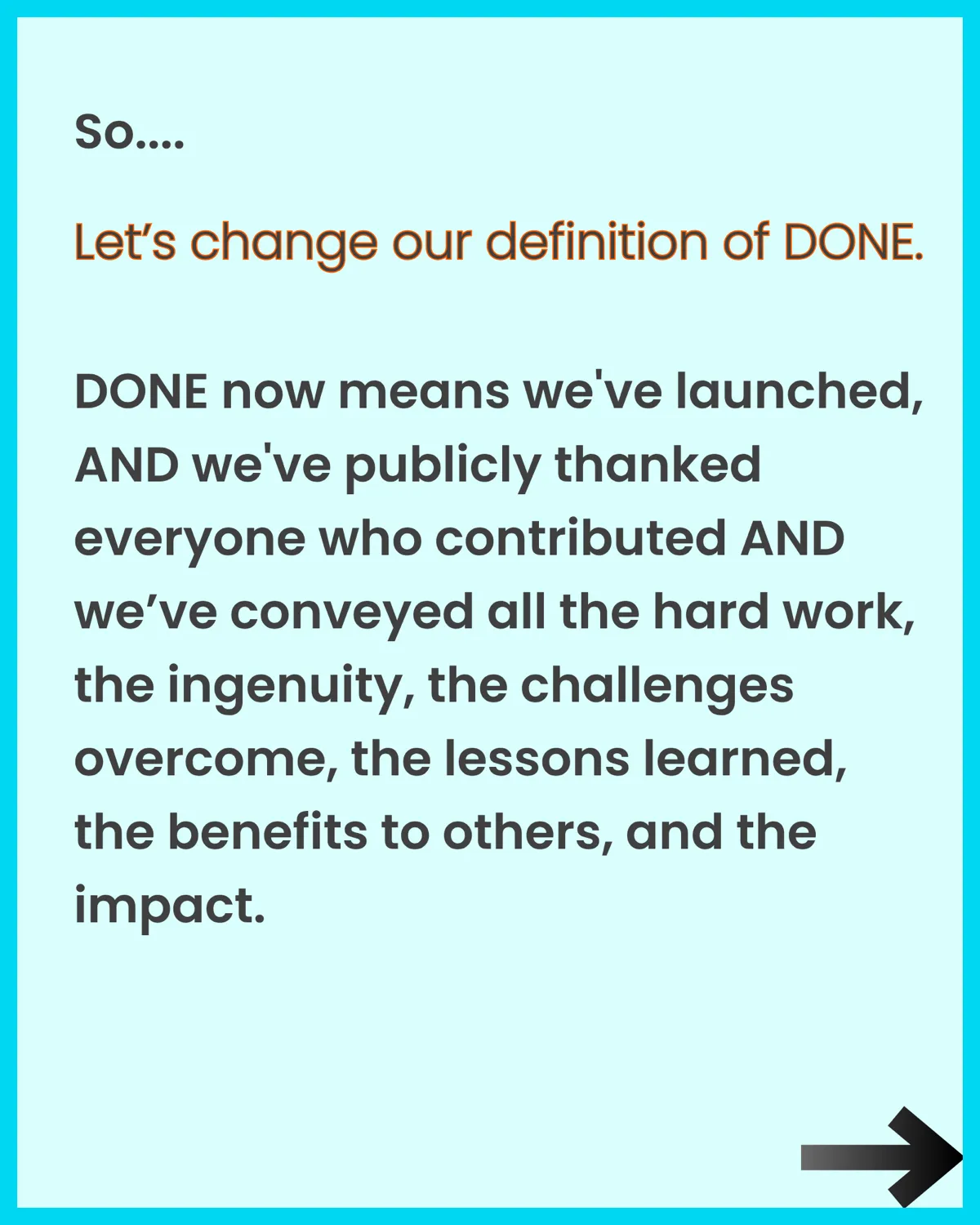
Here’s the simple shift: change what “DONE” means.
DONE now means: we’ve launched, AND we’ve publicly thanked everyone who contributed, AND we’ve conveyed all the hard work, the ingenuity, the challenges overcome, the lessons learned, the benefits to others, and the impact.
That’s not bragging. That’s closing the loop on the work properly — including the part where the people who care about the outcome learn what actually happened.
Oh, and sorry Tom. No hard feelings.